Workspace design today is no longer defined by rows of desks, fixed cubicles or monotonous schedules. As organisations continue to adapt to hybrid work, shifting employee expectations, and rapid technological change, workspace design in 2025 became more intentional, human-centered, and strategic than ever before.
Today, office interior designs must do more than just accommodate employees. They must support wellbeing, foster collaboration, reflect company values, and adapt to constant change. The following design trends highlight how office interior design trends evolved in 2025 to meet these demands.
Designing for a Hybrid-First Reality
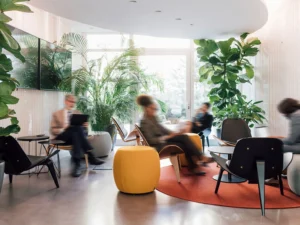
Hybrid work in modern office designs has moved from a temporary solution to a permanent operating model. In response, workspace design is shifting away from assigned seating toward flexible, activity-based environments.
Offices in 2025 prioritised adaptable layouts with a mix of shared desks, collaboration zones, quiet focus areas, and social spaces. As an office interior design company, our office interior designs today have to accommodate flexibility. Hence, spaces need to be planned to maximise efficiency alongside supporting autonomy and productivity.
Wellbeing as a Core Design Principle
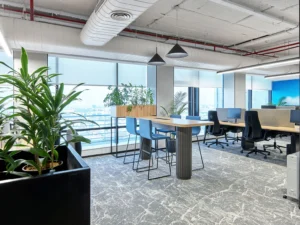
Office interior design companies are now recognising employee wellbeing as a crucial element in their workspace designs. Organisations are recognising that healthier environments lead to more engaged, resilient, and productive teams.
Modern office design strategies emphasise ergonomic furniture, adjustable lighting, improved acoustics, and access to quiet spaces for focus or restoration. Wellness rooms, recharge areas, and thoughtful spatial planning help reduce stress and support mental health. In 2025, workspaces expanded scope to a well-designed environment that sought to actively contribute to employee wellness rather than simply accommodate it.
Sustainability and Biophilic Design Take Center Stage
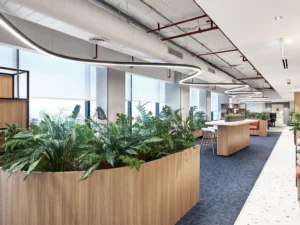
Sustainability is no longer a secondary consideration but rather a defining characteristic of modern workplaces. In 2025, office interior designs prioritised environmental responsibility, aligning with both corporate values and employee expectations.
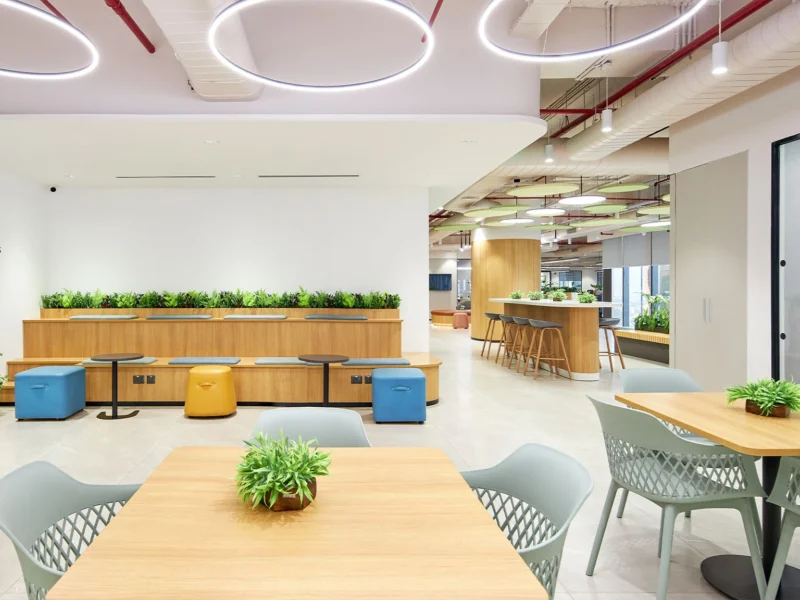
Biophilic designs today play a key role in modern office designs. They inspire incorporation of natural light, greenery, and organic materials to create healthier and more inspiring spaces. At the same time, low-carbon finishes and energy-efficient systems reflect a deeper commitment to reducing environmental impact. These design choices not only support environmental responsibility, but also enhance the quality, comfort, and performance of the spaces people inhabit every day.
Smart Workplaces Powered by Technology
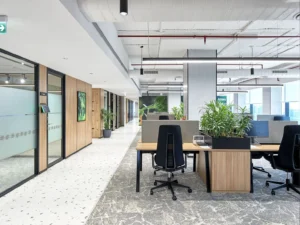
In 2025, technology was seamlessly woven into workspace designs, enabling offices to respond to their use in real time. Smart building systems monitor occupancy, air quality, and energy consumption, enabling organisations to optimise space utilisation while enhancing comfort and performance.
Employees benefit from intuitive tools such as app-based room booking, personalised lighting and environmental controls, and hybrid meeting technologies that support effortless collaboration between in-person and remote teams. Integration of technology in modern office designs today has proven to elevate workplace experience, making it more intelligent, responsive, and efficient.
Inclusive Design for a Diverse Workforce
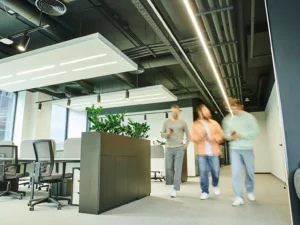
As modern office design understanding continues to diversify, inclusive design has become an essential consideration. Office interior designs in 2025 were thoughtfully conceived to support a broad spectrum of physical abilities, work styles, and sensory needs.
Office interior design companies can implement a range of considered strategies to create workplaces that are both inclusive and resilient. This includes accessible spatial planning, adjustable and ergonomic furniture, and environments that support neurodiversity through carefully calibrated lighting, acoustics, and materiality.
Inclusive design ensures that every individual, regardless of ability, work style, or preference, can navigate, engage with, and thrive within the workplace comfortably, confidently, and with dignity.
The Rise of Experiential and Brand-Driven Spaces
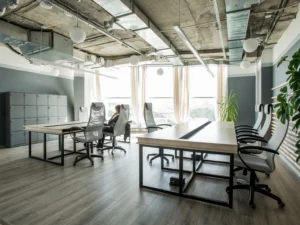
In a hybrid-first world, the workspace designs must offer experiences that extend beyond what employees can achieve at home. As a result, workplaces are becoming more experiential, using thoughtful design to reflect company culture and bring brand identity to life.
From branded collaboration hubs and innovation labs to curated art installations and storytelling elements, office interior designs in 2025 were crafted to create memorable, meaningful experiences. These spaces helped people connect more naturally, understand what the organisation stands for, and feel more invested in their time together when they are on site.
Offices as Collaboration and Connection Hubs
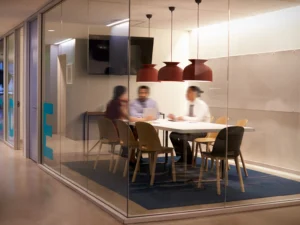
With individual focus work often happening remotely, the primary purpose of the workspace designs have shifted toward collaboration and connection. Workplaces are now designed to bring people together, physically and digitally.
High-quality video conferencing rooms, hybrid collaboration spaces, and informal gathering areas support seamless interaction across distributed teams. The office becomes a place for idea sharing, relationship building, and collective problem solving.
Going Forward
The office interior design trends of 2025 reflected a broader shift in how organisations view workspace designs as a dynamic ecosystem that supports people, culture, and business goals rather than a static asset.
By embracing flexibility, prioritising wellbeing, integrating technology, and designing with sustainability and inclusivity in mind, organizations can create workplaces that are resilient, engaging, and future-ready.
As the nature of work continues to evolve, one thing remains clear: thoughtful workspace design is no longer just about space, it’s about shaping the experience of work itself.
FAQs
- What were the top office interior design trends in 2025?
The leading office interior design trends in 2025 centred around flexibility, wellbeing, and experience. These include hybrid-first office layouts, wellbeing-led and biophilic design, sustainable and low-carbon materials, smart workplace technology, inclusive design principles, and collaboration-focused spaces. Together, these trends reflected a shift toward people-centred, adaptable, and technology-enabled workplaces. - How did hybrid work influence workspace design in 2025?
Hybrid working has fundamentally reshaped workspace design by moving away from fixed seating and full-time occupancy. Office interiors in 2025 prioritised shared desks, adaptable collaboration zones, quiet focus areas, and advanced hybrid meeting technology, allowing employees to choose how and where they work based on the task at hand. - Why is wellbeing important in modern workplace design?
Wellbeing is central to modern workspace design since healthier environments lead to higher productivity, stronger engagement, and improved employee retention. In 2025, office interior designers supported wellbeing through ergonomic furniture, access to natural light, improved acoustics, wellness and quiet rooms, and biophilic elements that help reduce stress and support focus. - What role does sustainability play in workplace design trends?
Sustainability is a defining factor in modern office designs today. It drives the selection of eco-conscious materials, energy-efficient systems, and low-carbon design solutions. In 2025, sustainable workplaces not only reduced environmental impact but also aligned with employee values and broader corporate ESG commitments. - How can companies update their offices in 2026 to match the 2025 workplace trends?
Companies can improve alignment in 2026 office interior design trends through thoughtful, phased updates rather than a full redesign. This may include introducing flexible furniture, enhancing collaboration areas, integrating smart workplace technology, incorporating plants and natural materials, and improving accessibility and inclusivity across the space.