For decades, workspaces have been designed with an intent to get maximum efficiency through structure. Today’s employees value collaboration, creativity, flexibility, and well-being just as much as productivity.
Within this shift, office breakout areas have emerged as one of the more essential, and often underestimated, elements of a workplace design. These spaces are informal office areas designed for quick discussions, collaboration, or short breaks away from desks. Unlike formal meeting rooms, they offer a more relaxed setting where employees can share ideas, brainstorm, or recharge. Far from being informal add-ons or leftover spaces, breakout areas are now essential environments that influence culture, performance, and employee experience.
Redefining Office Breakout Areas

A breakout area is best understood not as a room, but as a behavioural catalyst. It is an intentionally designed space that sits outside the formality of traditional meeting rooms and the rigidity of assigned desks. These areas support spontaneous conversations, quick problem-solving sessions, quiet reflection, and moments of mental reset.
Unlike pantries or lounges of the past, modern breakout areas designs are created with purpose. The concept acknowledges that some of the most valuable work happens in between meetings, during informal exchanges, or when people step away from their desks to think differently. In this sense, an office breakout area becomes a part of the work itself.
Growing Relevance of Breakout Area Designs

The growing importance of office breakout areas reflects a deeper change in how organisations view work and people.
Firstly, workspaces today are defined by collaborative spaces. Employees are attracted to culture and what offices offer beyond salaries. With that, innovation rarely emerges from scheduled meetings alone. It often starts with unplanned discussions, quick feedback loops, and cross-functional encounters. Office breakout areas lower the barriers to these interactions by offering environments that feel open, relaxed, and non-hierarchical. When people feel comfortable, they are more likely to share ideas, challenge assumptions, and build on each other’s thinking.
Secondly, employee well-being has moved from a peripheral concern to a strategic priority. Cognitive work requires periods of focus balanced with moments of rest and recovery. Office breakout areas provide spaces for mental decompression, informal social connection, or simply a change of scenery, each of which can significantly improve concentration and reduce burnout. In an era where attention is fragmented and stress levels are high, these spaces support sustainable performance rather than constant output.
Finally, hybrid work has fundamentally changed the role of the office. When employees can work anywhere, the office must offer something more than a desk. Their purpose, today, extends beyond conventional understanding, becoming a place that adds value through collaboration, culture, and connection. Thoughtfully designed office breakout areas help transform offices into social and creative hubs, giving people a reason to come together in person.
Read Also: Modern Office Interior Design Ideas
Design Principles for Effective Breakout Spaces
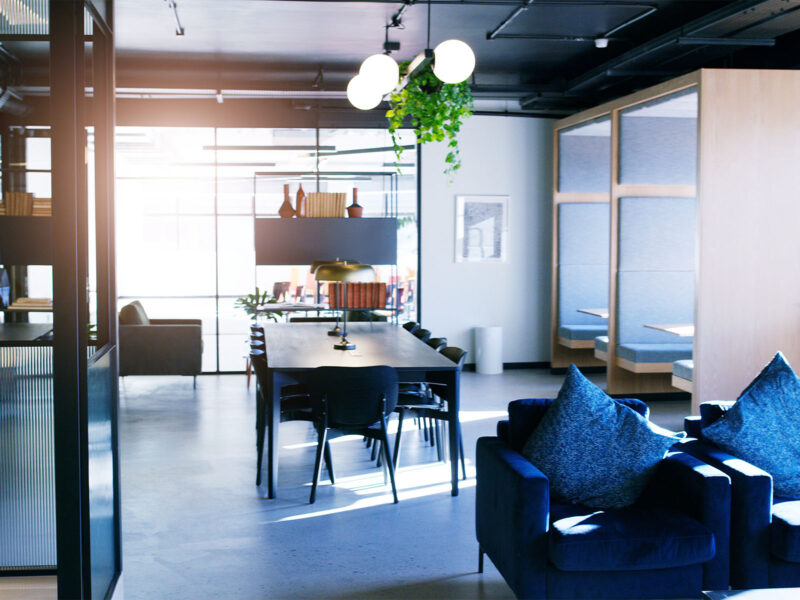
Effective office breakout area design begins with clarity of purpose. Not all office breakout areas should serve the same function- some areas may support energetic group discussions, while others are better suited for quiet reflection or one-on-one conversations.
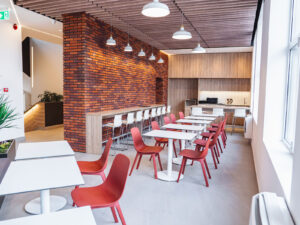
Zoning these spaces according to different work modes ensures they genuinely support diverse needs. Furniture plays a crucial role in shaping behavior. Office breakout spaces often use modular seating, height variation such as high tables and lounge seating, and lightweight movable furniture to create flexible layouts. These elements support mixed postures- sitting or standing, allowing people to move easily, collaborate comfortably, and adapt the space to different types of conversations or work.
Acoustics are another defining factor. Office breakout areas are often located near work zones, and without proper sound management, they can become sources of distraction rather than productivity. Strategic use of soft materials, spatial separation, and acoustic treatments allows informal interaction without disrupting focused work nearby.
Lighting and atmosphere further influence how people engage with these spaces. Access to natural light, warmer tones, and thoughtful material choices can make breakout areas feel inviting and human-centered, qualities often missing from traditional workplaces.
Finally, technology should support -not dominate- the space. Easy access to power, seamless connectivity, and optional collaboration tools enable work to flow naturally without turning breakout areas into just another meeting room.
Common Design Mistakes to Avoid

One of the most common mistakes organisations make is treating breakout areas as leftover space, planned only after all “important” areas are mapped out, which often leads to awkward layouts, poor acoustics, and unclear purpose. Without user input, even the most visually impressive breakout area designs risk becoming underutilised. As a design and build firm, SKV approaches these spaces with a balanced understanding of budget realities, area efficiency, compliance requirements, and long-term maintenance, ensuring they are both purposeful and practical.
Broader Impact

When designed thoughtfully, office breakout areas have a measurable impact on organisational performance. They support faster decision-making, stronger interpersonal relationships, and a more resilient workplace culture. They also signal trust in employees’ ability to manage their time, collaborate organically, and choose environments that support their work.
From a talent perspective, office breakout area designs can influence an organisation’s perception. They reflect values around flexibility, well-being, and innovation, all of which influence attraction and retention in a competitive talent market.
Designing the Future of Work

Office breakout areas are no longer optional features or aesthetic upgrades. They are strategic tools that reflect a deeper understanding of how people work best. As organisations continue to navigate change, the offices that succeed will be those designed not just for efficiency, but for creativity, connection, and human experience.
In designing breakout areas with intention, organisations are ultimately designing for the future of work itself.
Looking to upgrade your workspace? Connect with our expert office interior designers in Gurgaon for your design requirements.
Frequently Asked Questions
- How are office breakout areas different from traditional collaboration spaces?
Breakout areas in offices are designed to encourage informal, spontaneous interaction rather than scheduled, structured meetings. Unlike traditional collaboration spaces, they prioritise flexibility, comfort, and ease of access, making them part of the daily flow of work rather than destinations that require planning. - Can breakout area designs actually improve productivity?
When designed with intention, breakout areas enhance productivity by supporting different cognitive modes- collaboration and reflection. Poorly designed office breakout areas that lack acoustic control or clear purpose, often result in distraction and hindrance in work environments. - How many breakout areas should a modern office have?
At SKV, break-out areas are planned based on the number of employees, work culture, and work styles. More importantly, office breakout areas should be varied in type and function, ensuring employees can use spaces as per their task, energy level, and interaction needs. - Are breakout areas still relevant in hybrid or remote-first workplaces?
Yes, arguably more than ever. In hybrid environments, the office is no longer primarily a place for individual tasks. Breakout areas in offices support the social and collaborative value of in-person work, helping offices function as connection hubs rather than attendance requirements. - What does an office’s breakout area design signal about its culture?
Breakout areas in offices communicate trust, openness, and a human-centered approach to work. They signal that an organisation values collaboration, autonomy, and well-being, also a subtle nod to understanding that high-quality work happens in many forms, not just at a desk.