There is an ongoing fundamental shift in office designs as organisations reassess the idea of a workspace. No longer are offices viewed solely as a functional container for desks and meeting rooms; the modern workspace is increasingly recognised as a strategic space that performs beyond its conventional expectation. Within this context, biophilic design has emerged as a defining principle in contemporary workplace designs.
Rather than a passing trend, biophilic office designs reflect a deeper shift toward human-centred, evidence-based environments that respond to employee well-being, performance, and organisational culture.
Understanding Biophilic Design Concept in the Workplace

Biophilic design is an approach that intentionally integrates natural elements and processes into the built environment. Based on the fact that humans possess an inherent affinity for nature, it is a means to strengthen the connection between people and nature within office spaces.
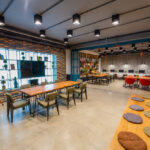
In workplace settings, the concept of biophilic design extends beyond the inclusion of indoor plants. It encompasses access to natural daylight, visual connections to the outdoors, the use of natural materials and textures, organic forms, and spatial layouts that reflect natural rhythms and patterns. Together, these elements create environments that feel intuitive, balanced, and supportive of human performance.
Biophilic Interior Design: Research-based evidence
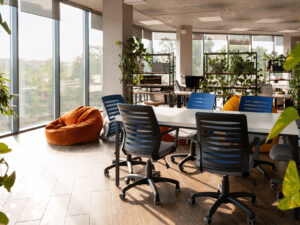
The growing adoption of biophilic interior design is supported by extensive research showing that exposure to natural elements reduces stress, improves cognitive function, and enhances emotional well-being. In office settings, these benefits translate into tangible business outcomes.
Biophilic interior designs benefit from a balance of visual complexity and structured order. Layered textures, subtle patterning, and varied finishes add depth and interest, while a coherent layout and consistent design language maintain clarity and spatial harmony. Nature-inspired environments also promote mental restoration, helping to counteract screen fatigue, cognitive overload, and workplace stress. For organisations aiming to boost productivity while supporting employee health, biophilia in office designs provide a proven, evidence-based approach.
Biophilic Office Designs: Enhancing Wellbeing

Workplace well-being has become a priority for employers today, particularly amid hybrid work, talent shortages, and rising burnout. Biophilic interior designs respond directly to these challenges by creating environments that support both physical and psychological health.
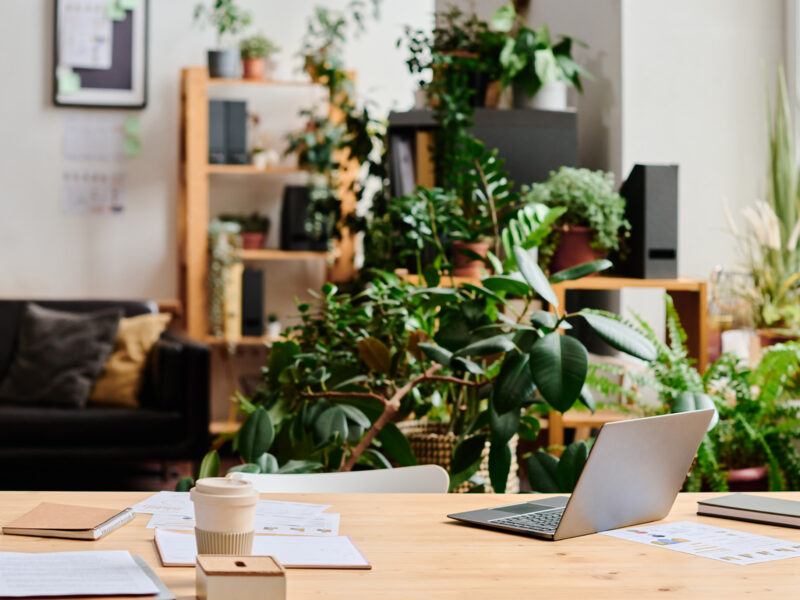
Incorporating direct natural elements such as indoor plants, living walls, and maximised daylight access helps create healthier and more engaging workplaces. Thoughtful placement of greenery alongside daylight optimisation improves visual comfort, supports circadian rhythms, and enhances the overall sense of vitality within the workspace.
Over time, these environments increase employee engagement and satisfaction, strengthening retention and reinforcing a positive organisational culture. Increasingly, employees see well-designed, health-supportive workplaces not as a luxury, but as a basic expectation today.
Incorporating Biophilic Interior Design

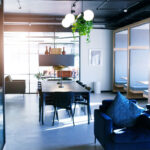
Biophilic design concepts can be thoughtfully incorporated into workspace interiors through a layered and integrated approach. Maximising access to natural daylight is fundamental, supported by transparent partitions and open layouts. Open zones provide clear sightlines and opportunities for collaboration, while quieter, sheltered areas allow individuals to focus or recharge, supporting diverse work modes within a single environment. Visual connections to the outdoors, whether through external views or internal references to landscape and water, further strengthen the sense of connection to nature.
The use of natural materials such as timber, stone, cork, and textured finishes, adds warmth and sensory variation, while nature-inspired colour palettes help create calm, balanced environments. Acoustic treatments, organic forms, and spatial zoning that reflect natural patterns can also enhance comfort and usability. When aligned with workplace strategy and operational needs, biophilic design in offices enhances performance while maintaining efficiency and design integrity.
Biophilic Office Designs: Significance and Sustainability
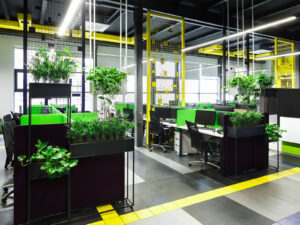
Biophilic design concepts are closely aligned with sustainable workplace strategies. The use of responsibly sourced materials, energy-efficient lighting, and passive design principles supports environmental objectives while enhancing occupant experience.
Biophilic workplace design also supports environmental performance through the careful coordination of lighting, air quality, and spatial planning. Strategies such as optimising surface light reflectance, integrating artificial lighting systems, and aligning plant placement with HVAC layouts contribute to healthier indoor environments. Consideration of indoor air quality (IAQ), alongside material selection and ventilation planning, further strengthens the overall performance and well-being outcomes of the workspace. These choices can reduce operational costs and contribute to long-term asset value.
From a brand perspective, biophilic office designs communicate clear organisational values. They signal a commitment to employee well-being, environmental responsibility, and thoughtful design leadership.
The Future of Work
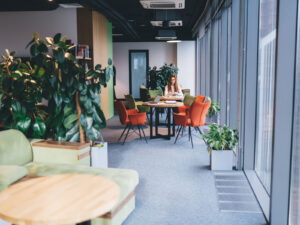
Biophilic office design is not simply about bringing nature indoors. It represents a broader commitment to designing workplaces around human needs.
For architects and interior designers, biophilic office designs offer an opportunity to create workplaces that are not only visually compelling, but also deeply functional, resilient, and aligned with long-term business objectives. In this sense, biophilic design is not just shaping modern workspaces but rather the future of work itself.
Frequently Asked Questions
- What is biophilic interior design in the context of workspaces?
Biophilic design is an evidence-based approach that integrates natural elements, materials, and patterns into workplace interiors to enhance well-being, productivity, and occupant experience.
- Does biophilic design require significant changes to an existing workspace?
Not necessarily. Biophilic office design principles can be incorporated through incremental interventions such as improved access to daylight, indoor planting, material upgrades, and nature-inspired finishes, without major structural alterations.
- How can biophilic design support employee performance and well-being?
By reducing stress, improving cognitive function, and enhancing comfort, biophilic office design creates environments that support focus, creativity, and overall workplace satisfaction, contributing to improved performance and retention.
- Is biophilic design compatible with hybrid and flexible working models?
Yes. Biophilic design helps create destination workplaces that encourage collaboration, social connection, and meaningful in-person engagement, aligning well with hybrid work strategies.
- How do biophilic design concepts align with sustainability and ESG objectives?
Biophilic office design often incorporates sustainable materials, energy-efficient lighting, and passive design strategies, supporting environmental performance while reinforcing organisational values and ESG commitments.