The physical workplace plays a far more strategic role than many organisations acknowledge. Office design shapes daily experience. It influences energy levels, focus, collaboration, and even how valued employees feel. Over time, these daily signals compound into either engagement or disengagement.
Workplace research frequently cited by Harvard Business Review demonstrates that office environments affect productivity and performance. The World Green Building Council has also linked healthier buildings to improved well-being and reduced absenteeism. These findings reinforce a simple reality: good office designs can inspire productivity.
Organisations that treat office design as a line-item expense often overlook its broader impact. Those that approach it strategically understand it as a long-term investment in talent retention.
Creating Productive Office Designs
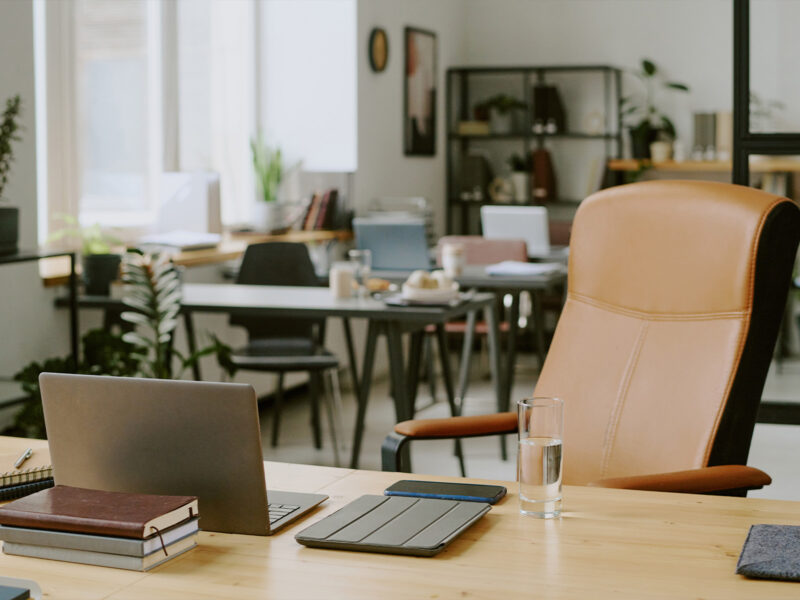
Workplaces are changing. As expectations around flexibility, collaboration, and well-being continue to evolve, traditional office designs no longer meet every need. Rethinking how these environments are designed requires more than aesthetic updates, it calls for a structured, people-centered approach.
Design thinking is a practical, people-focused approach to help create productive office designs. It starts by understanding how employees actually experience their workday, what helps them do their best work and what instills workplace wellbeing.
Because it is iterative, design thinking encourages testing ideas, gathering feedback, and making steady improvements. Mapping these experiences reveals practical challenges, such as sounds that disrupt deep work, meeting rooms that limit collaboration, or layouts that unintentionally isolate teams.
Once these challenges are clearly defined, organisations can generate and test solutions. A pilot quiet zone, an updated lighting strategy, or a redesigned collaboration area can be implemented and evaluated before scaling. This approach reduces risk while ensuring that design decisions are grounded in employee needs rather than trends.
Designing for Workplace Well-Being and Performance

Employee happiness is closely tied to physical and psychological comfort. Access to natural light, improved air quality, and the integration of natural elements can enhance mood and cognitive function. These changes directly influence how people feel and perform.
Ergonomic furniture and adaptable workstations further contribute to sustained well-being. Companies such as Google have demonstrated that investing in comfort supports innovation and long-term productivity. When employees are not distracted by physical strain, they are better able to focus on complex tasks.
Acoustic design is equally important. Excessive noise in open-plan offices has been linked to higher stress and lower concentration. Providing a balance of collaborative and quiet spaces enables employees to match their environment to their work, improving both satisfaction and output.
Bringing biophilia in office interiors

Biophilic office interiors integrate natural elements to improve workplace well-being, productivity, and overall experience. This approach goes beyond adding a few plants: it incorporates natural light, ventilation, organic materials, earthy colours, water features, and views of greenery to create a stronger connection to nature.
In refined workplace environments, biophilic principles are expressed with restraint and material integrity. Generous daylight, quiet courtyards, and uninterrupted views become the primary design features rather than decorative elements. Subtle transitions between indoor and outdoor spaces through terraces, planted thresholds, or filtered light, create a seamless experience.
Strengthening Culture and Belonging

Office design also reinforces organisational culture. Physical space communicates values more consistently than internal messaging. Transparent layouts can signal openness and collaboration, while thoughtfully designed shared areas can encourage meaningful interaction.
Organisations that have aligned their workspaces with their brand identity, have been able to create environments that reflect their mission and foster connection. When employees see their organisation’s values embedded in the space around them, cultural alignment becomes tangible rather than abstract, instilling workplace wellbeing.
Retention Advantage
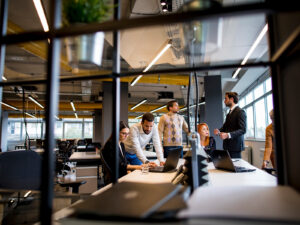
Employee turnover carries substantial financial and operational costs. Recruiting, onboarding, and lost productivity create ripple effects across teams. In contrast, a well-designed workplace reduces daily friction and supports sustained engagement.
Through a design thinking lens, a productive office design becomes a dynamic system that can evolve alongside employee needs. Regular feedback, performance metrics, and iterative improvements ensure that the environment offices continue to be productive. This adaptability is especially important as hybrid work models redefine why employees come into the office.
Ultimately, employees choose to stay where they feel supported, valued, and able to do their best work. Office design plays a measurable role in creating that experience. Organisations that view their workplace as a strategic asset rather than a static backdrop position themselves to improve both employee happiness and long-term retention.
Frequently Asked Questions
- How can biophilic office interiors bring productivity and wellbeing?
Research shows that exposure to natural elements can reduce stress, enhance creativity, and support productivity. By blending built environments with natural cues, biophilic office interiors feel calmer, healthier, and more engaging for the people who work in them. The result is a workplace that feels composed, timeless, and inherently elevated rather than overtly styled.
- How can branding inspire productive office design?
Belonging is a critical driver of retention. Spaces that encourage connection without forcing constant interaction support both collaboration and individual work styles. This balance reduces burnout and strengthens team cohesion.
- How does office design directly impact employee wellbeing?
Office design affects the daily physical and emotional experience of employees. Factors such as lighting, acoustics, layout, air quality, and access to collaborative or quiet spaces influence stress levels, focus, and energy. When the environment supports comfort and autonomy, employees are more likely to feel valued and engaged. Over time, these consistent positive experiences contribute to overall workplace wellbeing.
- Can better office design really improve employee retention?
Yes. While compensation and leadership are critical, the physical environment plays a supporting role in retention. A well-designed office reduces friction in daily tasks, supports collaboration, and prevents burnout. When employees feel supported by their environment, they are less likely to seek alternatives.
- How can companies measure the success of a productive office design?
Success of a productive office design can be measured through employee engagement surveys, retention rates, absenteeism data, and productivity indicators. Organisations such as the World Green Building Council emphasise linking environmental improvements to measurable well-being outcomes, reinforcing that workplace design should be evaluated with clear metrics rather than subjective impressions alone.