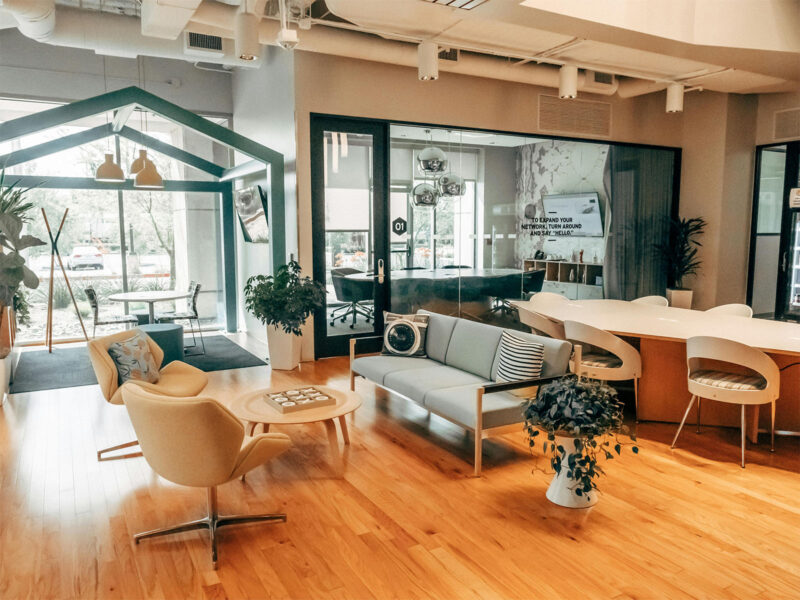
Office designs have always reflected the way we work. In recent years, corporate office design trends have pivoted to a more refined and streamlined concept. No longer defined solely by desks, meeting rooms, and circulation paths, the workplace of 2026 is emerging as a responsive environment: one that learns, adapts, and supports both people and performance. As organisations continue to navigate hybrid work, rapid technological advancement, and evolving expectations around sustainability, office design is becoming less about permanence and more about intelligence, longevity, and intention.
Latest office designs trends explore possibilities beyond traditional workspaces today. The designs are evolved to spaces that enable collaboration, focus, culture, and innovation. This shift demands a more thoughtful integration of architecture, interior design, and furniture where every element contributes to a coherent, future-ready whole.
For businesses investing in new workspaces or reimagining existing ones, understanding these office interior designs can help create workspaces that remain relevant, efficient, and engaging well beyond 2026.
Flexible Workspaces
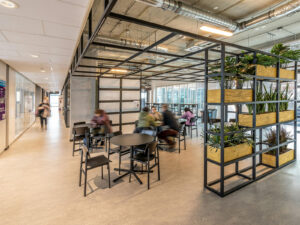
Flexibility will be one of the defining principles of office design in 2026. More recently, office interior design trends showcase workspaces more than just places of work – they anticipate change, support diverse work patterns, and quietly enhance performance without overwhelming the senses.
A global hub for multinational corporations, office interior designers in Bangalore, Hyderabad and Gurgaon, especially, have caught on to these corporate office design trends sooner than most. Rather than fixed layouts that serve a single function, offices are being designed as adaptable ecosystems that can shift with changing team sizes, work styles, and operational needs. Modular layouts, movable partitions, and reconfigurable workstations allow spaces to evolve without requiring constant renovation. Custom-designed furniture also plays a crucial role here, enabling spaces to transform seamlessly while maintaining a consistent design language.
Flexibility, when executed well, is not an overpowering design change but rather a strategic upgrade.
Human-Centric Design
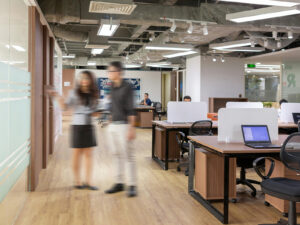
Despite the increasing influence of technology, the office interior design trend at the centre remains employee comfort and wellbeing. In 2026, the most successful workspaces are those that support physical comfort, mental focus, and emotional well-being, particularly in environments where cognitive demand is high. Implementation of smart technology in workspaces is not new concepts; office interior designers in Bangalore, and other global hubs, have used tech to fine-tune environmental conditions, subtly adjusting lighting, temperature, and air quality based on real-time usage patterns. These systems operate quietly in the background, enhancing comfort without requiring active human intervention.
From a design perspective, this allows interiors to feel intuitive rather than overstimulating. Another latest office design trend that has flooded workspaces is the use of ergonomic furniture, generous spatial planning, and carefully considered materials to reduce physical strain and visual noise. In technology-focused workplaces, where long hours and screen-heavy work are common, such design choices play a critical role in sustaining productivity as well as wellbeing. Luxury in this context is not about excess, but about precision, spaces that are designed to support people without demanding attention.
Designing for Cognitive Clarity
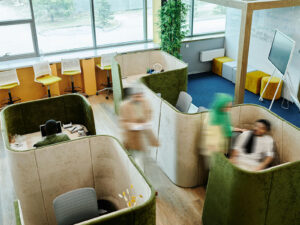
As work becomes increasingly complex, offices in 2026 are being designed to reduce cognitive overload. More corporate office design trends address how spatial sequencing, colour palettes, and visual hierarchy influence focus. Clean sightlines, intuitive wayfinding, and restrained material transitions help people move through spaces seamlessly. For high-performance environments, this also supports sustained concentration and decision-making, making design an active contributor to productivity.
Corporate interiors are continuing to soften in character, borrowing cues from hospitality and residential design. This does not mean informality, but rather a more nuanced sense of comfort and warmth. In 2026, offices feature layered lighting, tactile surfaces, and furniture that invites use rather than demands posture. For clients, this subtle corporate office design trend helps counterbalance highly digital workflows, creating environments that feel grounded, human, and emotionally engaging.
Artificial intelligence-enabled workspaces
Artificial intelligence is becoming an integral part of office environments. In 2026, office interior design trends comprise AI-driven systems that manage energy consumption, optimise space utilisation, anticipate maintenance needs, and increasingly support smarter cost management by analysing long-term operational data. These systems help organisations understand not only how spaces are used, but how resources are spent, allowing workplaces to be designed and refined with greater financial and environmental efficiency.
Beyond operations, corporate office design trends, especially, focus on AI’s influence on how teams collaborate and, in turn, assisting workplaces to evolve over time. By analysing real-time data on movement, interaction patterns, and space performance, office interior designers can gain insights into how different teams work together and how the interiors can be refined to improve user experience. Using this feedback cycle allows office interiors to be continuously refined, layouts adjusted, furniture reconfigured, and zones recalibrated to better support collaboration, focus, and flow. Design, in this context, becomes an ongoing process rather than a fixed outcome.
Refined Approach to Sustainability
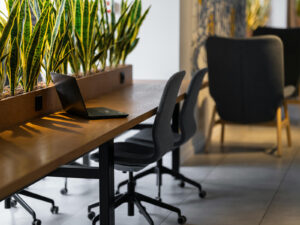
Sustainability is one significant office interior design trend that has evolved consistently, particularly at the premium end of the market. In 2026, it is no longer defined by its conventional understanding, but by material intelligence and long-term thinking. Advances in material science have made it possible to use materials that meet the highest standards of finish, durability, and performance whilst reducing overall environmental impact. These materials are also refined, tactile, and designed to age gracefully.
Corporate office design trends view sustainability as an extension of innovation rather than a separate agenda. Custom furniture manufacturing enables this philosophy to be realised with precision. Components can be designed for disassembly, materials selected for longevity, and finishes chosen to reduce the frequency of wear and tear. This approach reflects a more responsible understanding of sustainable design, one that values permanence, adaptability, and reduced intervention as markers of quality.
Meaningful Interaction, Collaboration

With routine individual tasks increasingly performed remotely, the office has become a destination for collaboration. In 2026, office interior design trends continue to push collaboration spaces, designed to support creativity, problem-solving, and exchange rather than formal meetings alone.
Here, the use of custom furniture is essential, allowing workspaces to feel meaningful and comfortable. Seating arrangements, tables, and spatial dividers are designed to support different types of interaction, from informal conversations to focused workshops. Corporate interior design trends, lately, embrace these interventions as informal innovation labs, spaces where ideas are explored and refined. Material choices tend toward warmth and tactility, balancing the precision of digital work with a more human, grounded experience.
Craft, Detail and Understated Luxury
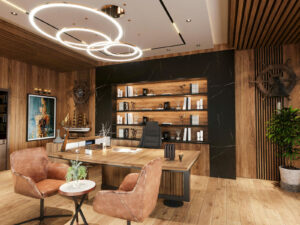
Corporate office design trends are also embracing refinement along with designing focus-spaces for their employees. Rather than bold statements, 2026 workspace interiors focus on precision, proportion, and craftsmanship. Custom furniture details, refined joinery, and carefully resolved interfaces between materials signal quality to those who use the space every day.
International brands are increasingly leaning towards cultural celebration, welcoming an attention to design detail. For example, office interior designers in Bangalore are integrating cultural influences into workplaces through thoughtful material selection, sculptural elements, and adaptable colour palettes, each carefully aligned with the brand’s identity. This understated approach resonates strongly with technology brands and forward-thinking organisations that value sophistication without excess.
Looking Ahead
By 2026, the most meaningful offices won’t be defined by passing trends, but by the clarity of thought behind them. They will be shaped by a balance of human insight and intelligent systems, where design choices are guided by real understanding of people, materials, and the way work truly happens day to day. Sustainability will feel natural, reflected in spaces that are built to last, adapt, and age well. Technology, meanwhile, will support work quietly, enhancing comfort and performance without ever becoming intrusive.
For organisations that choose to invest thoughtfully in their workplaces, the office becomes more than a functional setting. It becomes a place that supports people, expresses values, and grows alongside the business.
FAQs
- How will office interior design trends significantly differ in 2026 than previous years?
Office designs in 2026 will be less about fixed layouts and visual statements, and more about adaptability, intelligence, and long-term value. Workspaces will be designed to respond to changing work patterns, integrate technology, and support both collaboration and individual focus through thoughtful spatial planning. - How will Artificial Intelligence influence corporate office design trends in 2026?
AI has been increasingly working behind the scenes for a few years. In 2026, expect it to help offices operate more efficiently and generally evolve over time. It informs space utilisation, energy performance, and workplace behaviour, allowing designers to create environments that are responsible and responsive. - How is sustainability being approached in premium office designs?
Sustainability in high-quality corporate office interiors is expressed through material choices, durability and adaptability. Designers are focusing on materials that age well, furniture that can be reconfigured or reused, and design strategies that reduce the need for frequent refurbishment. - Are these office interior design trends relevant for only tech-led companies?
These office interior design trends apply to all. Organisations that evolve quickly benefit greatly from adaptable, intelligently designed workplaces. For office interior designers in Bangalore and other such tech-led and fast-growing company hubs, workspaces designed with flexibility, data-informed planning, and custom solutions can support growth while maintaining clarity, consistency, and brand identity. - Why is custom furniture becoming more important in office design?
Custom furniture allows workspaces to be designed as cohesive systems rather than assembled from standard components. It enables better integration of technology, improved ergonomics, and greater flexibility, while ensuring the office reflects the organisation’s culture and long-term needs. - What makes an office feel “premium” without being excessive?
A premium office is defined by quality and restraint rather than scale or spectacle. Latest office design trends adopt precision in detailing, well-resolved junctions, durable materials, and custom-designed elements contribute to spaces that feel considered and confident rather than overstated.